
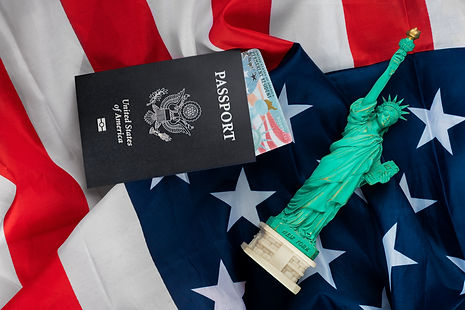
Naturalization
Naturalization and U.S. Citizenship Services by CSM Law Office
Becoming a United States citizen is a major milestone that represents stability, opportunity, and long-term security. For many green card holders, this step marks the transition from permanent residency to full participation in American life.
At CSM Law Office, we guide individuals through the naturalization process USA with a clear, structured, and results-focused approach.
In 2026, naturalization is also one of the fastest-moving immigration categories at USCIS, with national median processing times averaging approximately 8 months. With processing times currently at a near 10-year low, now is one of the most strategic times in recent years to file an N-400 application.
The path to citizenship involves legal requirements, documentation, and preparation. While the process is defined, it can still become complicated without proper legal guidance.
As an experienced citizenship lawyer, our role is to simplify the process, ensure accuracy, and help you move forward with confidence at every stage.
Individuals searching for N-400 help or how to apply for U.S. citizenship often need more than instructions—they need a reliable legal strategy. That is where our firm provides value.
What the Naturalization Process USA Involves
The naturalization process USA is designed for lawful permanent residents who meet specific eligibility requirements. These requirements include continuous residence, physical presence in the United States, and demonstration of good moral character.
Applicants must also:
-
Complete and file Form N-400
-
Attend a biometrics appointment
-
Pass an English language test
-
Pass the updated U.S. civics exam
-
Participate in a USCIS interview
While these steps are standard, errors or incomplete applications can lead to delays or denials. Working with a citizenship lawyer helps ensure that your application meets USCIS expectations from the beginning.
Our Naturalization Legal Services
At CSM Law Office, we provide comprehensive legal support tailored to each stage of the naturalization process USA. Our services are designed to reduce uncertainty and improve the likelihood of success.
Eligibility Assessment and Legal Review
We analyze your immigration history, residency timeline, and background to confirm eligibility before filing your application.
N-400 Application Preparation and Filing
We provide complete N-400 help, ensuring that your application is accurate, complete, and supported by proper documentation.
As of May 2026, the standard N-400 filing fee is:
-
$710 for online filing
-
$50 biometrics fee
-
Total standard cost: $760
Reduced Fee Eligibility Assistance
Many applicants may qualify for reduced filing fees under updated USCIS financial eligibility guidelines.
In 2026, applicants with household incomes between 150% and 400% of the Federal Poverty Guidelines may qualify for a significantly reduced filing fee through Form I-942.
Eligible applicants may pay a reduced total fee of approximately $380 instead of the full filing amount.
At CSM Law Office, we help clients evaluate reduced fee eligibility and prepare supporting financial documentation correctly to avoid delays or rejections.
USCIS Interview Preparation
We guide you through the interview process, including common questions and civics test preparation, so you feel confident and prepared.
Case Monitoring and USCIS Communication
As your citizenship lawyer, we track your application and respond to any USCIS requests or issues.
Appeals and Complex Case Support
If complications arise, we assist with appeals and additional legal steps to protect your application.
Oath Ceremony Preparation
We provide guidance through the final stage, ensuring you are ready for the oath ceremony and transition to citizenship.
Step-by-Step Approach to Becoming a U.S. Citizen
Many individuals searching for naturalization process USA want a clear roadmap. At CSM Law Office, we break the process into manageable steps:
-
Initial Evaluation – Confirm eligibility and identify potential issues
-
Application Preparation – Complete and review Form N-400
-
Submission and Processing – File application and monitor progress
-
Interview Preparation – Practice responses and review civics materials
-
Interview Attendance – Attend USCIS interview
-
Final Decision and Oath Ceremony – Complete the process
This structured approach helps eliminate confusion and ensures that each stage is handled properly.
Common Challenges in the Naturalization Process
Although the naturalization process USA is standardized, several common issues can affect applications:
-
Incorrect or incomplete N-400 forms
-
Gaps in residency or travel history
-
Missed USCIS deadlines
-
Insufficient preparation for the interview
-
Prior immigration or legal complications
As a citizenship lawyer providing N-400 help, we address these issues early. This reduces delays and strengthens your application.
Preparing for the USCIS Citizenship Interview
The USCIS interview is one of the most important steps in the naturalization process. During this interview, applicants must demonstrate knowledge of U.S. history and government, as well as English language ability.
For N-400 applications filed on or after October 20, 2025, USCIS implemented the updated 2025 Naturalization Civics Test.
Under the new format:
-
The civics test question bank expanded from 100 to 128 questions
-
USCIS officers may ask up to 20 civics questions during the interview
-
Applicants must answer at least 12 questions correctly to pass
This is a significant change from the previous “6 out of 10” format that many applicants still see referenced online.
At CSM Law Office, we prepare clients thoroughly for the updated exam structure by:
-
Reviewing application details
-
Practicing interview questions
-
Explaining the updated 2025 civics test format
-
Providing structured civics preparation materials
-
Preparing clients for the expanded questioning process
Clients searching for N-400 help often find that proper preparation significantly reduces stress and improves confidence.
Benefits of U.S. Citizenship
Becoming a U.S. citizen provides several long-term advantages, including:
-
The right to vote in federal elections
-
Eligibility for a U.S. passport
-
Ability to sponsor additional family members
-
Protection from deportation
-
Access to broader employment opportunities
As a citizenship lawyer, we help clients understand not only the process but also the long-term value of achieving citizenship.
Avoiding Delays and Improving Approval Chances
One of the most important aspects of the naturalization process USA is avoiding delays. Even minor errors can slow down your case.
Our firm focuses on:
-
Accurate documentation
-
Proper application completion
-
Early identification of risks
-
Clear communication with USCIS
-
Interview and civics test preparation
Clients searching for citizenship lawyer USA or naturalization help often benefit from professional guidance that prevents common mistakes.
A Strategic Approach to Naturalization
Naturalization should not be treated as a simple administrative task. It is a legal process that requires attention to detail and strategic planning.
At CSM Law Office, we take a proactive approach. As your citizenship lawyer, we ensure that every part of your application is prepared with accuracy and care.
We also consider potential complications and address them before they become obstacles.
With USCIS processing times currently moving faster than they have in years, filing a properly prepared application early can provide significant advantages.
Supporting Green Card Holders Through the Process
Green card holders often face uncertainty about when and how to apply for citizenship. Questions about eligibility, travel history, filing costs, and documentation are common.
Our role is to provide clarity. We guide clients through the naturalization process USA with straightforward explanations and practical steps.
Individuals searching for how to become a U.S. citizen or N-400 help benefit from a structured legal approach that removes confusion.
A Clear Path Toward U.S. Citizenship
Naturalization represents progress, stability, and long-term opportunity. It is a process that requires preparation, but with the right guidance, it becomes manageable and predictable.
At CSM Law Office, we focus on creating a clear path forward. As a citizenship lawyer, we provide support that is structured, reliable, and focused on results.
If you are considering applying or need assistance with your case, taking the right steps early can make a meaningful difference.
Take the Next Step with Confidence
Applying for U.S. citizenship is a decision that carries long-term impact. It requires accuracy, preparation, and a clear understanding of the process.
At CSM Law Office, we approach naturalization with a focus on clarity and execution. Our role is to ensure that your application is properly prepared and that you are ready for each stage of the process.
If you are searching for N-400 help, guidance on the naturalization process USA, reduced fee eligibility assistance, or support from an experienced citizenship lawyer, our team is ready to assist.
Every step you take toward citizenship should be supported by a strong legal foundation. With the right approach, you can move forward with confidence and clarity toward becoming a United States citizen.
FAQ on the Subject
What is naturalization? Naturalization is the process by which a lawful permanent resident (green card holder) becomes a U.S. citizen.
Who is eligible for naturalization? Generally, a lawful permanent resident who is at least 18 years old, has been a green card holder for at least 5 years (or 3 years if married to a U.S. citizen), has continuously resided in the U.S., and meets other requirements like good moral character and English proficiency.
What is the continuous residence requirement? Continuous residence means living in the U.S. as a lawful permanent resident for at least 5 years (or 3 years if married to a U.S. citizen) without any trips outside the U.S. that last 6 months or more.
What is the physical presence requirement? Physical presence requires that you have been physically present in the U.S. for at least half of the required continuous residence period—30 months for the 5-year requirement, or 18 months for the 3-year requirement if married to a U.S. citizen.
What are the English and civics requirements? Applicants must demonstrate the ability to read, write, and speak basic English and pass a civics test on U.S. history and government. Exceptions are available for certain applicants based on age and time as a green card holder.
How do I apply for naturalization? The process begins by filing Form N-400, Application for Naturalization, along with required documentation and the filing fee. After submission, you will be scheduled for biometrics, an interview, and a citizenship test.
What is included in the naturalization interview? The interview includes a review of your application, questions about your background, and the English and civics tests. The officer will also assess your eligibility for naturalization.
What should I bring to the naturalization interview? Bring your green card, passport, state-issued ID, any documents listed in your interview notice, and any other documents that support your application (e.g., tax records, marriage certificates).
What is the Oath of Allegiance? The Oath of Allegiance is a formal declaration of loyalty to the United States that must be taken by all naturalization applicants. After taking the oath at a naturalization ceremony, you officially become a U.S. citizen.
Can I apply for naturalization if I’ve been outside the U.S. for an extended period? If you have been outside the U.S. for 6 months or more, it may disrupt your continuous residence, and you may need to provide additional evidence to maintain eligibility. If outside for over a year, special steps like filing for a reentry permit may be required.
Can my children become U.S. citizens when I naturalize? Yes, if your children are under 18, are lawful permanent residents, and are in your legal and physical custody, they may automatically become U.S. citizens when you naturalize.
What if I fail the naturalization test? If you fail the English or civics test, you will be given another opportunity to take the portion of the test you failed, usually within 60 to 90 days of your initial interview.
What happens if my naturalization application is denied? If denied, you can appeal the decision by filing Form N-336, Request for a Hearing on a Decision in Naturalization Proceedings, or reapply if your circumstances change.
Can I travel outside the U.S. while my naturalization application is pending? Yes, you can travel, but ensure you meet the continuous residence and physical presence requirements. Notify USCIS if you plan to be away for an extended period.
What are the benefits of becoming a U.S. citizen? Benefits include the right to vote, the ability to apply for a U.S. passport, eligibility for federal jobs, protection from deportation, and the ability to sponsor relatives for immigration.
Do I need to give up my original citizenship? The U.S. allows dual citizenship, but some countries may require you to renounce your original citizenship upon becoming a U.S. citizen. Check with the relevant country’s embassy or consulate.
Can I change my name during the naturalization process? Yes, you can request a name change during the naturalization process, and if approved, it will be granted at your oath ceremony.
How soon can I apply for a U.S. passport after naturalization? You can apply for a U.S. passport immediately after your naturalization ceremony. You will need your Certificate of Naturalization to do so.
What types of abuse qualify for VAWA? Qualifying abuse includes physical violence, sexual abuse, emotional abuse, psychological abuse, financial control, threats, intimidation, and other forms of extreme cruelty.
Can I sponsor family members once I become a U.S. citizen? Yes, as a U.S. citizen, you can sponsor certain relatives, including spouses, children, parents, and siblings, for immigration to the U.S.